Start typing to search posts!
Results for:
Categories
Recent Posts

Test Post_2.10.2.2
September 19, 2026

TRUCOR Introduces New Collection Names
September 18, 2026

A Happy Accident: The History of Vinyl Plank Floors
By Shawn Glines
November 3, 2019
A Happy Accident: The History of Vinyl Plank Floors
The History of Vinyl Plank Floors
Sometimes accidents are a happy thing. Such is the case with vinyl plank floors. We discuss the interesting history of vinyl planks here!
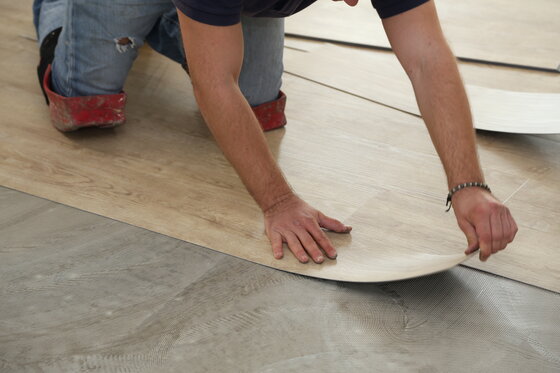
Some of the most useful items in the world are accidents. The 3M dust mask began its life as a molded lingerie bra cup. Toll House Chocolate Chip cookies were supposed to be chocolate butter cookies.
Vinyl plank floors are the result of an accidental invention, too. Researchers in 1800s Europe developed a rigid material with vinyl chloride gas—a material for which no practical or commercial use was conceived. In 1926, the BF Goodrich scientist Waldo Semon failed at creating an adhesive and discovered the rubber-like vinyl (polyvinyl chloride) instead.
Post-WWII, vinyl flooring replaced linoleum and asphalt tiles as a popular flooring choice. Read on to learn more about how vinyl planks came to be.
Showcase Debut
Vinyl flooring made its debut at the 1933 Chicago “A Century of Progress” Exposition. Budget-friendly, resilient, and flame resistant, vinyl composite tiles stirred plenty of interest.
Unfortunately, vinyl was a rare material for floors until after WWII. War meant that materials like petroleum were in short supply. Vinyl tile production stalled.
The rush of thousands of military personnel returning from war and buying homes boosted vinyl sales in the 50s. At the same time, it was a popular choice for businesses, schools, and hospitals.
60s Popularity
Vinyl flooring characteristics of affordability and durability made it the ideal selection for homes. It became immensely popular. Vinyl tile contributes to the hallmark looks of Mid-Century Modern and Futura styles.
The 1960s also brought design improvements like the "no-wax" finish and cushioned vinyl. These improvements made vinyl the flooring of choice for homes, businesses, and institutions.
Color and pattern improvements in the 1960s saw vinyl imitating parquet, Roman tile, and more. Tiles imitating ceramic mosaic or Spanish tiles became a popular choice. Sheet vinyl and tiles rivaled carpet in popularity.
Vinyl Plank Floors Debut in the 70s
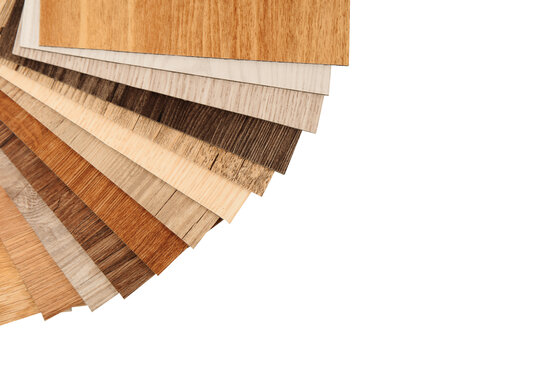
A wide variety of colors, patterns, and textures advanced in the 1970s. Home decor trends moved into earth tones and wood accents. American Colonial Revival decor was the height of fashion.
American Colonial Revival and other trends of the 70s demanded wood floors. However, hardwood floors were beyond the budget of many homeowners. Also, wood floors warped, stained and buckled in damp locations or shrank and cracked in dry climates.
The first vinyl plank floors introduced options for users who wanted the appearance of hardwood floors in spaces like bathrooms and basements. Vinyl planks gave the realistic look of a wood floor without the jarring price or heavy maintenance.
Design improvements over the next decade include the removal of asbestos from tile manufacturing, beveled edges to make the plank more realistic and texture enhancements.
Modern Vinyl Flooring
All of the advantages of the original vinyl tile of 1933 still make it the material of choice for looks, durability, and price. Even though there are hundreds of alternative materials, vinyl remains a top choice for kitchens and bathrooms.
Special Note: All vinyl flooring (sheet, tile or plank) installed before the mid-1980s needs evaluation by a professional for asbestos. Removal of vinyl containing asbestos should only be attempted by a professional. This ensures that the asbestos is not released into the air.
The newest vinyl choices are asbestos-free. They have photorealistic 3-D graphics to simulate natural materials, durability, and low maintenance.
Most tiles and planks are made with four fused layers. These consist of a vinyl backing, a color layer, a foil-printed graphics layer, and an aluminum oxide or urethane wear layer measured in "mils". A mil is 1000th of an inch and not to be confused with millimeter. The thickness and quality of each of the layers determine the grade.
What's Exciting About Today's Vinyl?
Vinyl persists as a preferred option for homes today. What makes it such a consistent choice?
- It's versatile: Vinyl is available in textures, finishes, colors, and patterns like never before. Designs mimic natural materials (like stone or wood) or take their cue from retro solid colors. Tiles and planks come in different shapes and sizes.
- It's timeless: It blends with pre-existing styles in a snap. With nearly 50 years as a home favorite, there are nearly endless design options. Combine patterns and shades for a unique, one-of-a-kind floor accent.
- It's cost-effective: The per square foot cost of vinyl, with the upgraded features, is still less than other materials—even those much less durable.
- It's waterproof: Almost all vinyl plank floors are 100% waterproof. They are easy to maintain and clean. They don't stain or corrode. You can have the look of wood in bathrooms, laundry rooms, and kitchens without worry.
Vinyl floor planks come in different thicknesses, widths, lengths, and installations. You can choose between self-adhesive, glue-down or floating applications.
Upgrades You May Not Know About
The newest vinyl floors are all the rage in today's marketplace. They are floating vinyl tiles or planks that are waterproof with a wood-plastic composite (WPC) or stone-plastic composite (SPC) core. Both offer unheard of durability and temperature stability.
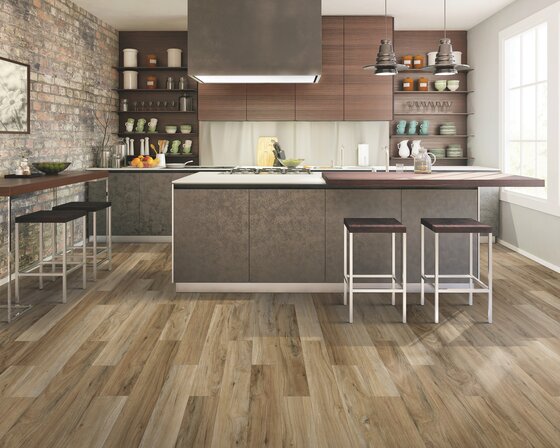
WPC is resilient and offers a slightly springy feel. SPC is thinner, more rigid and offers commercial-level durability. Both floating floor materials are completely waterproof and easier to install than a laminate.
New finishes available for vinyl floors allow for mirror-like shine without a slip hazard. A microscopic coating allows grip without dulling the gloss. Some floors have a protective layer against dents, stains, scratches, and scuffs.
Vinyl flooring reduces static electricity discharges at home. Instead of leaping through you or your electronics, static electricity is channeled away through the floor.
Since 2010, low Volatile Organic Compounds (VOC) emissions are standard. New floors off-gas little or no detectable VOCs. Many new flooring products are considered eco-friendly.
They contain recycled PVC and limit their environmental impact. Some products meet green LEED building standards.
Choose Durable Vinyl Flooring
The newest versions of vinyl floor planks give a homeowner almost endless options to upgrade their residence at a reasonable cost. Designers and DIY'ers choose luxury vinyl plank floors to add modern upscale looks. Vinyl is still a fraction of the cost of other flooring options.
The list of vinyl flooring advantages is long.
- Versatile
- Water-Resistant
- Easy to Install
- Economical
It's resistant to wear, easy to clean and available in many styles. Technological advancements include coatings against wear, scratches, dents, and stains. Even though these new vinyl floors are extremely durable, we highly recommend using felt pads on the bottom of your furniture to protect your investment. Low VOC and recycled options are environmentally-friendly.
Whether you want to go with vinyl tiles or stylish vinyl plank floors, there are plenty of up to the minute looks. Find the best fit for your home and dream design. Order your samples today.
Disclosure: The amazon links we post are affiliate links, as an Amazon Associate, I earn from qualifying purchases.